
Recent years have seen major advancements, though, in alternatively fuelled vehicles such as hybrid cars or all-electric cars. The world has simultaneously seen big steps forward in solar technology.
So the big question is whether the two will ever be able to come together to give the planet a solely solar-powered car.
The short answer is “probably” – but it will take a while.
There are already solar-powered cars that take part in solar challenges such as the North American Solar Challenge in the U.S. and Canada, and the World Solar Challenge across the Australian outback – whereby teams of budding engineers from universities around the globe build and race solar-powered cars.

Tokai University’s Solar Car “Tokai Challenger”. The winner of 2009 Global Green Challenge. Source: Wikipedia/Solar Car
These are very lightweight vehicles, which are wide and flat for minimal wind resistance and maximum solar panel allowance. They usually carry only one person, but can reach speeds of 50 mph and cover hundreds of miles, crossing entire continents without using any fuel; not so much low emission cars as no emission cars!
At the moment, though, the large solar panels and battery packs required to make such cars practical for everyday use mean solar isn’t a practical option. But it’s on is way, gradually, and the technology developed in the engineers’ challenge events is used by major manufacturers.
As battery technology develops and they get lighter, and solar power improves further by means as yet unknown, then it seems we will see a solar powered car – i.e. on which continually recharges a powerful battery in the same way that all-electric cars currently work. Before that happens, it seems likely that we’ll see solar playing an ever-increasing role in recharging the batteries of electric cars as a supplement rather than sole power source.
 After having cut the sod, taken part in a health and safety briefing and designed their own safety posters for Accrington-based contractor Rosslee Construction, the children are now being introduced to the two main building components – Wienerberger’s Porotherm thermal clay blocks and Second Nature’s natural insulations, sheep’s wool Thermafleece and Edenbloc recycled carpets.
 book which gives you all you need to so.
 ) with Q&S and affirmations.
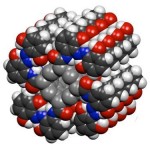 Researchers at the Massachusetts Institute of technology have come up with yet another revolutionary discovery. The team of MIT scientists claims that it has devised a new type of solar thermal fuel. The thing that makes this fuel different and better is that it can store 10,000 times more energy than any other existing fuel or system. Once again, nanotechnology has found its application in this fuel in the form of carbon nanotubes (CNTs) that have been altered a little by azobenzene. This new material can be used as a substitute for the lithium ion batteries since it possesses the same energy per unit volume. It can be charged by exposing it to the sun and can be used for a long period.
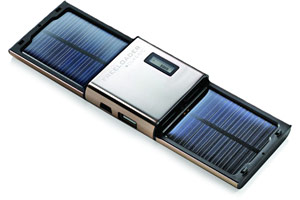 There’s a plethora of eco products on the market that promise to slash your power, heating or water bills, but our tests reveal that not all of them deliver on those claims. We sent a range of eco products to our lab for testing, while others went to a user panel for assessment.







Without a doubt, solar energy is the way of the future. Solar energy production is an extremely simple process to…